Windsong EC's Handy Dandy Genetic Guide
Index
- Color Genetics
- Pattern Genetics
- Color/Pattern Genetics Help
- Other Modifiers
- Color Combination Chart
- Genetic Disorders
- Breed Specific Genetics
- Different Colors/Descriptions
- Different Patterns/Descriptions
- Genetic Terms
The Basics
Alleles - The alternative forms of each gene.
Autosomal - Any other chromosomes other than sex determining chromosomes (XY)
Chimerism - Often known as brindle in horses. This occurs when there are two non identical embryos in the womb and one is absorbed by the other (fuse together), resulting in dna from two foals being in one foal. This means the foal has two different sets of dna. They may have a kidney that developed from one dna type and a heart that developed from another. One cell line can be female and the other can be male or both can be male or female.
DNA - The building block of life. The molecules that encodes the genetic instructions used in the development of all life.
DNA - The building block of life. The molecules that encodes the genetic instructions used in the development of all life.
Dominant Allele - The expressed allele in a heterozygous pair.
Eumelanin - Black pigment.
Heterozygous - Alleles not the same. (ir Aat,Ee,Crcr)
Hidden Recessive - The presence of a recessive allele that's hidden by a dominant allele (ie chestnut hides silver)
Homozygous - Alleles are the same. (ie AA,EE,CrCr)
Phaeomelanin - Orange-red pigment.
Recessive Allele - The unexpressed allele in a heterozygous pair.
What decides a foal's pattern or markings? Foals develop their markings in the womb. Conditions of the womb determine markings. Facial, leg, and body markings of clones and twins are not always identical.
All equine color is built on one of two possible base pigments, red or black.
Color Genetics
Agouti Locus
Alleles: 4 Known
Inheritance: Autosomal
- A+ - Agouti, Wild type. Dominant. Highly restricts expression of eumelanin in the hair to the points of the horse (mane, tail, legs). Heterozygous or Homozygous forms produces a bay unless two copies of recessive red is present.
- A - Dominant. Restricts hair to the points of the horse. Responsible for standard bays.
- Aa - Self, Recessive. Expands the area where eumelanin can be expressed to cover entire body. Produces black in Homozygous form unless two copies of recessive red is present.
- At - Dominant. Responsible for producing seal brown. Poorly restricts eumelanin. Produces a near black body color with black points and reddish tan around the soft points. True seal brown horses can be distinguished from bay horses through a DNA test
Champagne Locus
Alleles: 2 Known
Inheritance: Autosomal - Ch - Champagne, Dominant. Lightens eumelanin to a lilac or chocolate color, lightens phaeomelanin to a golden color (sometimes mistaken for palomino) in the adult coat. Foal coats usually don't show the champagne affect. Eyes are lightened. Bright blue at birth, amber, hazel or blue as an adult. Skin is pumpkin-colored and freckled.
- ch+ - Non champagne. Recessive.
Cream & Pearl Locus
Alleles: 4 Known
Inheritance: Autosomal
- Cr+ - Normal color. Semi dominant. Takes two copies of Cr+ to have a normal color.
- Crcr - Cream. Has a stronger dilution effect on phaeomelanin than it does on eumelanin. In heterozygous form it has little if any visible effect on eumelanin. Cannot be homozygous inherited with pearl.
- Prl+ - Normal color. Dominant.
- prl - Pearl. Recessive. Also known as barlink factor. Resembles cream and champagne but it neither. In homozygous form will alter Chestnut horses to a gold color with freckled pink skin. Virtually indistinguishable from buff. In either heterozygous or homozygous combined with heterozygous cream it will create a phenotype that can't be told apart from a homozygous cream. Dilutes skin to pink, coat to off white, eyes to blue. Cannot be inherited homozygous with cream.
Dominant Dark Locus
Alleles: 2 Theorized
Inheritance: Autosomal
- K - Dominant. Epistatic to A locus. Gene will allow expression of eumelanin over entire coat regardless of what alleles are present on the A locus. Presence of red recessive suppresses the expression of K. Produces non fading, true black.
- k+ - Normal. Recessive.
Dun Locus
Alleles: 2 Known
Inheritance: Autosomal
- D+ - Dun. Dominant. Dilutes barrel area, neck, and upper legs. Leaves a dark dorsal stripe, zebra stripes on the upper legs, and often has a dark face mask, ear barring, neck cape, cob webbing, and wither bars.
- d - Non dun. Recessive.
Extension Locus
Alleles: 3 Known
Inheritance: Autosomal
- E+ - Full extension. Dominant. Allows expression of eumelanin in the hair shaft.
- e - Recessive red. Red factor. In homozygous form it prevents the expression of eumelanin on the hair but doesn't affect phaeomelanin. Epistatic to A and K loci.
- ea - Wild Type. Heterozygous. Recessive. Red and black factors. In homozygous form it prevents the expression of eumelanin in the hair but doesn't affect phaeomelanin. This locus is epistatic to A and K loci. Basic color will be bay, black, or brown. Can pass down red or black to the foal.
Flaxen Locus
Alleles: 2 Theorized
Inheritance: Autosomal
- F+ - Non flaxen. Dominant.
- f - Flaxen. Recessive. In homozygous form it has a bleaching effect on the mane and/or tail or recessive red horses. No affect on eumelanin. Often mistaken for palomino.
Grey Locus
Alleles: 2 Known
Inheritance: Autsomal
- G - Grey. Dominant. Causes progressive loss of pigmentation in hair shafts as horse ages. Causes an increased formation of melanomas which is further increased in horses homozygous for grey. Homozygous has higher incidence of vitiligo. Homozygous greys faster than heterozygous. Heterozygous have a higher incidence of being fleabitten grey.
- g+ - Not grey. Recessive.
Pangare Locus
Alleles: 2 Theorized
Inheritance: Autosomal
- Pa+ - Pangare. Dominant. Commonly known as mealy. No effect on eumelanin but lightens phaeomelanin on soft parts (muzzle, flanks) Turns chestnut into sorrel, bay into mealy bay.
- pa - Non pangare. Recessive.
Silver Locus
Alleles: 2 KnownInheritance: Autosomal
- Z - Silver Dapple. Dominant. Acts on eumelanin only. Turns black into a chocolate color with a flaxen mane/tail. Bay has pigment on lower legs and a flaxen or silver/grey mane/tail.
- z+ - Non silver. Recessive.
Frame Overo Locus
Alleles: 2 Known
Inheritance: Autosomal
- Ov - Overo. Incomplete dominant. Produces irregular, jagged white markings that run horizontally across the horse. Does not cross the back or affect the leg coloring or tail but often produces bald faces and blue eyes. Cryptic frames exist and minimally marked horses are not uncommon and are heterozygous for the Ile118Lys mutation.
- Ov+ - Non overo. Recessive.
KIT Locus
Alleles: 11 Known
Inheritance: Autosomal
Dominant White
*Homozygous W/W horses most thought to not be able to produce a viable embyro which leads to early embryonic death*
Part of an equine linkage group attached to expression genes.
*Example*
Horse is E+/e RN+/rn
can only pass E+ Rn+ or e rn; never E+ rn or e Rn+ (same for all kit genes)
Dominant White
*Homozygous W/W horses most thought to not be able to produce a viable embyro which leads to early embryonic death*
- W1 - Single nucleotide polymorphism. Mutation. Found in Franches Montagnes horses descended from a mare named Cigale. Mutation is thought to severely affect the funtion of KIT. Some are born pure white but many have pigment along the topline which they might lose over time. Homozygous nonviable.
- W2 - Single nucleotide polymorphism. Mutation. Found in Thoroughbreds descended from a stallion named KY Colonel.
- W3 - Single nucleotide polymorphism. Mutation. Found in Arabian horses descended from a stallion named R Khasper. Horses usually have flecks or patches of pigmented skin and hair which might fade over time. Some have blue eyes but might be inherited through a different gene. Homozygous nonviable.
- W4 - Single nucleotide polymorphism. Mutation found in Camarillo White horses descended from a stallion named Sultan. May have some pigmented areas near the topline that might eventually fade.
- W5 - Deletion in exon 15. Mutation. Found in Thoroughbreds descended from a stallion named Puchilingui. Can be anywhere from a pure white to sabino like markings to only having a large blaze and high stockings.
- W6 - Mutaion. Expressivity isn't known. Found in a Thoroughbred. Thought to occur spontaneously.
- W7 - Splice site mutation. Found in a Thoroughbred.
- W8 - Found in an Icelandic horse.
- W9 - Found in a Holstein horse.
- W10 - Found in a Quarter Horse stallion named GQ Santana. Phenotypes similar to W5.
- W11 - Found in a South German Draft Horse.
Roan
Alleles: 2 Theorized
Inheritance: Autosomal
- Rn+ - Roan. Dominant. Creates a mixture of white hairs interspersed throughout the coat. Head, legs, mane, and tail remain solid colored. Forelegs always have an inverted V of dark hair not affected by the roan. Horse are born with the roan color and do not become lighter as they age, unlike grey. Corn marks can occur where skin has been damaged and the hair grows back solid colored. Homozygous form is not lethal as previously believed. Linked to the KIT gene.
- rn - Non roan. Recessive
Sabino 1
Alleles: 2 Known
Inheritance: Autosomal
Sabino 2
Alleles: 2 Theorized
Inheritance: Autosomal
- Sa2 - Sabino. Incomplete dominant. White spotting pattern that affects the skin underneath turning it pink. Roaning is present around the edges of the markings.Belly spots, irregular face markings, and white above the hocks or knees. Some may have a dark leg or two and can have blue eyes from an unrelated genetic factor. Homozygous form can produce an almost all white horse but is not linked to LWO. This is not the genetic pattern seen in Clydesdales. Linked to the KIT gene.
- sa2+ - Non sabino. Recessive.
Tobiano
Alleles: 2 Known
Inheritance: Autosomal
- TO - Tobiano. Dominant. Facial markings are the same as a normal colored horse with legs being white from the knees and hocks down. The white is vertical and crosses the back. Markings are smooth and rounded or oval. Dark coloring on the chest and front of the neck. Not linked to LWO. Linked to the KIT gene. Homozygous will always produce tobiano unless dominant grey gene is present causing the coat to grey and leaving the pink skin underneath causing ghost markings.
- to+ - Non tobiano. Recessive
Lp Locus
Alleles: 2 Known
Inheritance: Autosomal
*Leopard complex is what's responsible for varnish roan*
*Leopard complex is what's responsible for varnish roan*
- Lp - Leopard Complex. It is an incomplete dominant. Causes mottling around the eyes, muzzle, and genitals. A white sclera and striped hooves. Linked to abnormalities in vision and eyes. Other white patterns obscure leopard spots. Homozgous produces smaller spots while heterozygous produces larger spots. AKA the varnish roan. They gradually roan out as they age.
- Lp/Lp - Horse with two copies mostly without spots. AKA the fewspots and snowcaps.
- lp+ - Does not carry Leopard Complex. Recessive.
PATN-1
Alleles: 2 Theorized
Inheritance: Autosomal
*responsible for the Leopard Pattern.*
Alleles: 2 Theorized
Inheritance: Autosomal
*PATN-2 is what's responsible for the blanket pattern*
Alleles: 2 Theorized
Inheritance: Autosomal
*responsible for the Leopard Pattern.*
- PATN-1+/n - Dominant. Heterozygous can be solid but may throw a spotted foal. Causes the leopard pattern when paired with Lp/lp+ and fewspot when paired with LP/LP.
- patn-1/patn-1 - Does not carry PATN-1.
Alleles: 2 Theorized
Inheritance: Autosomal
*PATN-2 is what's responsible for the blanket pattern*
- PATN-2+/n - Dominant. Heterozygous. Causes the spotted blanket pattern with one LP gene, no spotted blanket with LP/LP.
- patn-2/patn-2 - Does not carry PATN-2
Rabicano Locus
Alleles: 2 Theorized
Inheritance: Autosomal
- Rb - Rabicano. Dominant. Often mistaken for roan. Causes white hairs to be interspersed along the flank area, belly, and can reach as far as under the throatlatch. It causes a ticking or roaning pattern. The horse normally has a "skunk" tail with white hairs in the base of the tail and can even have stripes on barrel.
- rb+ - Non rabicano. Recessive.
Splash Locus
Alleles: 4 Known
Inheritance: Autosomal
- SW1 - Splashed White. Dominant. Can be homozygous, not embryonic lethal as previously thought. Not part of the KIT gene. Found in any breed; Old mutation. Found at MITF.
- SW2 - Splashed White. Dominant. Homozygous thought to be lethal. Only found in certain APHA/AQHA lines. Stems from Katie Gun, dam of well known reiner "Gunner." Found at PAX. Possibly homozygous lethal.
- SW3 - Splashed White. Dominant. Unknown Origin. Homozygous thought to be lethal. Found at MITF. Possibly homozygous lethal.
- Macchiato - Splashed White. Only one horse has been found with this named Apache du Peupe. Franches-Montagnes gelding. Mutation caused low sperm motility, deafness, hair color diluted. Likened mutation to human syndromes Tietz and Waardenburg.Possibly homozygous lethal.
- spl+ - Non splashed white. Recessive.
*Note* Possible to Inherit:
SW1/SW1
SW1/SW2
SW1/SW3
SW1/SW1 with SW2
along with SW2/N and SW3/N of course
SW1/SW1
SW1/SW2
SW1/SW3
SW1/SW1 with SW2
along with SW2/N and SW3/N of course
Impossible to Inherit:
SW2/SW2
SW3/SW3
SW2/SW3
SW1/SW1 with SW3
SW2/SW2
SW3/SW3
SW2/SW3
SW1/SW1 with SW3
Brindle
Extremely rare. May be somehow linked to chimerism. Produces irregular stripes that extent vertically over the horse's body and horizontally over the leg. Heaviest brindling is on the neck, shoulders, and hindquarters. Head is usually solid colored. This pattern is not passed down and tests done on individual patterns on the same horse have shown two different sets of genetics. Foals are normally born with either one coloring or the other that makes up the brindle's coat. (ie brindle with one black stripes and chestnut everywhere else will either pass down the chestnut or the black but not both)
Sooty
Produces countershading. Normally has a false dorsal stripe and may be mistaken for dun. Looks as though soot has been dropped over the top of the horse. Many also have a darker mask on the bony parts of the face. Possibly a polygenic trait.
Basic Genes
Bay, Chestnut, Seal Brown, and Black are basic colors.
Recessive red will prevent the expression of Bay, Seal Brown, Black, and Silver.
Two recessive red horses bred to each other will never have a Bay, Black, or Seal Brown based foal.
A homozygous E+/E+ horse will never have a chestnut based foal. However horses that are E+/e or E+/ea can have a recessive red foal.
Seal brown must have at least one copy of E/E or E/e and must have either At/At or At/a.
Dilutions
Cream, Pearl, Champagne, Dun, Pangare, and Silver are dilutions.
Silver, Cream, or Dun will show on a Champagne that doesn't also have another dilution gene.
Combining champagne with multiple dilutions makes it nearly undetectablewhich are present without testing.
Roan and Rabicano are not visible on a Champagne horse.
Champagne is not visible on a double cream.
When Pearl is present Silver, Roan, and Rabicano cannot be seen.
It takes two copies of Pearl to change the color of a horse. A single Pearl gene doesn't affect Bay, Chestnut or Black horses.
Pearl and Cream cannot be inherited homozygous together, as they're assumed to be on the same Locus.
Pearl combined with one cream will produce a psuedo-cream with blue/green eyes and pale skin. It can resemble a Smoky Cream, Cremello, or Perlino.
Homozygous prl/prl with a normal colored horse will lighten the coat, mane, and tail and creates pale skin creating an apricot color.
One cream gene will make Bay into Buckskin, Black into Smoky Black (wich can be indistinguishable from Black), Seal Brown into Brown Buckskin, and Chestnut into Palomino.
Two cream genes will turn Bay in Perlino, Black into Smoky Cream, and Chestnut into Cremello. Eyes are blue, skin is a peach color, and the coat is a cream or ivory color.
Champagne makes Bay into Amber Champagne, Brown into Sable Champagne, Black into Classic Champagne, Seal Brown into Sable Champagne, and Chestnut into a Gold Champagne.
Dun makes Bay into Bay or Zebra Dun, Seal Brown into Brown into a Brown Dun (Coloration between a Slate Grey & a Bay Dun), Black into Grulla/Grullo, and Chestnut into a Red Dun.
Z/Z has the same effect homozygous as it does heterozygous. Still doesn't affect Chestnut.
Grey
Grey gene acts differently from all other coat genes.
All grey horses will lighten as they age, but doesn't affect skin or eye color.
Homozygous G/G will always have a grey foal. They can never have a normal colored foal. Foals are born dark and grey out with age.
Greying may not be visible on double creams or horses with many dilutions or extensive white markings because of extreme lack of pigment.
Patterns
Roan makes Bay into Bay Roan, Black into a Blue Roan, Chestnut into a Strawberry or Red Roan, and Seal Brown
Silver, Cream, or Dun will show on a Champagne that doesn't also have another dilution gene.
Combining champagne with multiple dilutions makes it nearly undetectablewhich are present without testing.
Roan and Rabicano are not visible on a Champagne horse.
Champagne is not visible on a double cream.
When Pearl is present Silver, Roan, and Rabicano cannot be seen.
It takes two copies of Pearl to change the color of a horse. A single Pearl gene doesn't affect Bay, Chestnut or Black horses.
Pearl and Cream cannot be inherited homozygous together, as they're assumed to be on the same Locus.
Pearl combined with one cream will produce a psuedo-cream with blue/green eyes and pale skin. It can resemble a Smoky Cream, Cremello, or Perlino.
Homozygous prl/prl with a normal colored horse will lighten the coat, mane, and tail and creates pale skin creating an apricot color.
One cream gene will make Bay into Buckskin, Black into Smoky Black (wich can be indistinguishable from Black), Seal Brown into Brown Buckskin, and Chestnut into Palomino.
Two cream genes will turn Bay in Perlino, Black into Smoky Cream, and Chestnut into Cremello. Eyes are blue, skin is a peach color, and the coat is a cream or ivory color.
Champagne makes Bay into Amber Champagne, Brown into Sable Champagne, Black into Classic Champagne, Seal Brown into Sable Champagne, and Chestnut into a Gold Champagne.
Dun makes Bay into Bay or Zebra Dun, Seal Brown into Brown into a Brown Dun (Coloration between a Slate Grey & a Bay Dun), Black into Grulla/Grullo, and Chestnut into a Red Dun.
Z/Z has the same effect homozygous as it does heterozygous. Still doesn't affect Chestnut.
Grey
Grey gene acts differently from all other coat genes.
All grey horses will lighten as they age, but doesn't affect skin or eye color.
Homozygous G/G will always have a grey foal. They can never have a normal colored foal. Foals are born dark and grey out with age.
Greying may not be visible on double creams or horses with many dilutions or extensive white markings because of extreme lack of pigment.
Patterns
Roan makes Bay into Bay Roan, Black into a Blue Roan, Chestnut into a Strawberry or Red Roan, and Seal Brown
Roan, Sabino, and Tobiano are all mutations affecting the KIT gene on chromosome 3. Unlikely to carry all three. Horses carrying any two of those are likely heterozygous.
Equine Anterior Segment Dysgenesis (ASD) - Semi dominant. Found in mountain horse breeds. Thought to be linked to the silver gene that mountain horse breeders constantly breed for. Carriers inherit only one abnormal gene from one of its parents, there is only the very slight and harmless physical indication of cyst. In homozygous form, the eyes of the horse will almost always show a variety of other differences in addition to the cysts. only one of the various ASD syndrome characteristics adversely affects the vision of the horse, where the lens itself is out of proper position or is detached. This is the only characteristic that will get worse over time. The detached lens develops cloudiness that worsens with time.
Cerebellar abiotrophy (CA/CCA) - Recessive. Genetic neurologial condition. Affects Arabian and part-Arabian horses. Foals appear normal at birth but the disease causes the death of neurons in the cerebellum of affected foals, leading to head tremor and a lack of balance equilibrium. There is no cure and foals are either put down or left to be pasture pets since their balance will never be good enough to be ridden.
Chronic Progressive Lymphedema (CPL/CPD) - Found in draft horse breeds and has been recognized in the Gypsy Vanner breed. It starts at an early age and progresses throughout the life of the horse. It often ends in disfigurement and disability of the legs, which leads to premature death.
Congenital Stationary Nigh Blindness (CSNB) - Affects vision in low lighting. Has been linked with the leopard complex in homozygous form but can occur in non leopard breeds.
Cerebellar abiotrophy (CA/CCA) - Recessive. Genetic neurologial condition. Affects Arabian and part-Arabian horses. Foals appear normal at birth but the disease causes the death of neurons in the cerebellum of affected foals, leading to head tremor and a lack of balance equilibrium. There is no cure and foals are either put down or left to be pasture pets since their balance will never be good enough to be ridden.
Chronic Progressive Lymphedema (CPL/CPD) - Found in draft horse breeds and has been recognized in the Gypsy Vanner breed. It starts at an early age and progresses throughout the life of the horse. It often ends in disfigurement and disability of the legs, which leads to premature death.
Congenital Stationary Nigh Blindness (CSNB) - Affects vision in low lighting. Has been linked with the leopard complex in homozygous form but can occur in non leopard breeds.
Degenerative Suspensory Ligament Desmitis (DSLD/ESPA) - It's been recognized in the Peruvian Paso, Peruvian Paso crosses, Arabians, American Saddlebreds, American Quarter Horses, Thoroughbreds and some European breeds such as the Irish Thoroughbred and Swedish Warmbloods. May be mildly affected and have only a painful response to palpation of the suspensory ligaments, especially the suspensory branches. An exaggerated dropping of the fetlocks while in motion may be noted. The pasterns eventually become horizontal and ringbone may occur. Treatment is possible but the horse can only be put to pasture and it pain becomes too bad, the horse must be put down.
EJE/JES/JIE -
Equine Dwarfism - Recessive genetic disorder. Expressed in homozygous form. Rare in average sized horses but more common in miniature horses. It causes an underdeveloped body with an abnormally short stature, underdeveloped limbs, and other defects. There are four types of dwarfism: diastrophia, achondroplasia, brachiocephalia, and hypochondrogenesis. Hypochondrogenesis is lethal in embryonic form.
Equine Recurrent Ueveitis (ERU) - Greatest risk in Appaloosas. Little pigment around eyelids and sparse mane/tail hair mark more at risk horses.
Glycogen Branching Enzyme Disorder (GBED) - Autosomal Recessive. Found in Quarter Horse, Paint Horse, and related breeds. Prevents the horse from being able to store sugars. Affected foals have lack of energy, inability to rise, seizures, low body temp and sudden death. GBED is always fatal.
GPT -
Hereditary Equine Regional Dermal Asthenia (HERDA) - Autosomal Recessive. Found in Quarter Horses descended from Poco Bueno and Appaloosa and Paint Horse breeds that allow outcrossing to Quarter Horses. It's a connective tissue disorder that, in homozygous form, weakens the collagen fibers that allow the skin to stay attatched to the animal. There is no cure and average lifespan is only 2-4yrs. Horses are usually put down due to the pain of basically being skinned alive.
HNS/NFS -
Hyperkalemic Periodic Paralysis (HYPP) - Dominant genetic muscle disorder found in stock-type breeds descending from the Quarter Horse stallion Impressive. Causes muscle twitching, spasms, weakness, and paralysis in affected horses. Expression may range from asymptomatic to fatal.
Junctional Epidermolysis Bullosa (JEB) - Autosomal Recessive. Also known as Hairless Foal Syndrome or Red Foot Disease. JEB1 Occurs in Belgian Draft horses and related draft breeds, JEB2 occurs in American Saddlebred Horses. Typically born alive with no symptoms but there's no cure and foals normally die within days developing lesions and losing the hoof wall causing severe infections and pain.
Lavender Foal Syndrome (LFS) - A rare condition in Arabian foals. It only occurs in newborn Egyptian Arabian foals and causes a bleached out appearance of the coat. Usually it is a silver or light lavender color but it can also be a grey or light chestnut. At birth most foals lay with stiff or paddling legs with the head arched backward. Can produce foals with seizures, and the foals will not survive. It's also known as Coat Color Dilution Syndrome (CCDL).
Lethal White Over Syndrome (LWO) - A genetic condition caused by being homozygous for the Frame Overo allele in which the foal's intestines do not properly function resulting in the death of the foal. This condition is 100% fatal.
Malignant Hyperthermia (MH) - Autosomal dominant. Rare genetic muscle disorder. Affects Quarter Horses and related breeds. Horse may not show any physical signs of the disorder until triggered by exposure to anesthesia or extreme exercise or stress. Symptoms can include high temperature, increased heart rate, high blood pressure, sweating, acidosis, and muscle rigidity. If not treated fast enough, it is lethal.
OAAM -
Polysaccharide Storage Myopathy (PSSM/EPSM) - Autosomal dominant. Muscle disease in Quarter Horse and related breeds. Can also occur in Warmbloods, Drafts, and Draft crosses. There are two different types of PSSM found in horses, Type 1 and Type 2. Type 1 is found in over 20 breeds and commonly affects Quarter Horses, Quarter Horse-related breeds, Morgans, some Draft breeds and some warmbloods. Type 2 PSSM is found in Quarter Horses, Arabians, Thoroughbreds and potentially other light breeds. The Draft breeds affected by Type 1 PSSM are Belgians, Percherons and many European Draft breeds. The disease causes tying up when exercising. A strict diet and exercise routine can help improve a horse with PSSM.
Severe Combined Immunodeficiency Disorder (SCID) - Autosomal recessive. Deficiency of the immune system, foals aren't able to fight off infections and easily get them. Affected foals always die in the first six months of life. Occurs in Arabian and part-Arabian horses.
EJE/JES/JIE -
Equine Dwarfism - Recessive genetic disorder. Expressed in homozygous form. Rare in average sized horses but more common in miniature horses. It causes an underdeveloped body with an abnormally short stature, underdeveloped limbs, and other defects. There are four types of dwarfism: diastrophia, achondroplasia, brachiocephalia, and hypochondrogenesis. Hypochondrogenesis is lethal in embryonic form.
Equine Recurrent Ueveitis (ERU) - Greatest risk in Appaloosas. Little pigment around eyelids and sparse mane/tail hair mark more at risk horses.
Glycogen Branching Enzyme Disorder (GBED) - Autosomal Recessive. Found in Quarter Horse, Paint Horse, and related breeds. Prevents the horse from being able to store sugars. Affected foals have lack of energy, inability to rise, seizures, low body temp and sudden death. GBED is always fatal.
GPT -
Hereditary Equine Regional Dermal Asthenia (HERDA) - Autosomal Recessive. Found in Quarter Horses descended from Poco Bueno and Appaloosa and Paint Horse breeds that allow outcrossing to Quarter Horses. It's a connective tissue disorder that, in homozygous form, weakens the collagen fibers that allow the skin to stay attatched to the animal. There is no cure and average lifespan is only 2-4yrs. Horses are usually put down due to the pain of basically being skinned alive.
HNS/NFS -
Hyperkalemic Periodic Paralysis (HYPP) - Dominant genetic muscle disorder found in stock-type breeds descending from the Quarter Horse stallion Impressive. Causes muscle twitching, spasms, weakness, and paralysis in affected horses. Expression may range from asymptomatic to fatal.
Junctional Epidermolysis Bullosa (JEB) - Autosomal Recessive. Also known as Hairless Foal Syndrome or Red Foot Disease. JEB1 Occurs in Belgian Draft horses and related draft breeds, JEB2 occurs in American Saddlebred Horses. Typically born alive with no symptoms but there's no cure and foals normally die within days developing lesions and losing the hoof wall causing severe infections and pain.
Lavender Foal Syndrome (LFS) - A rare condition in Arabian foals. It only occurs in newborn Egyptian Arabian foals and causes a bleached out appearance of the coat. Usually it is a silver or light lavender color but it can also be a grey or light chestnut. At birth most foals lay with stiff or paddling legs with the head arched backward. Can produce foals with seizures, and the foals will not survive. It's also known as Coat Color Dilution Syndrome (CCDL).
Lethal White Over Syndrome (LWO) - A genetic condition caused by being homozygous for the Frame Overo allele in which the foal's intestines do not properly function resulting in the death of the foal. This condition is 100% fatal.
Malignant Hyperthermia (MH) - Autosomal dominant. Rare genetic muscle disorder. Affects Quarter Horses and related breeds. Horse may not show any physical signs of the disorder until triggered by exposure to anesthesia or extreme exercise or stress. Symptoms can include high temperature, increased heart rate, high blood pressure, sweating, acidosis, and muscle rigidity. If not treated fast enough, it is lethal.
OAAM -
Polysaccharide Storage Myopathy (PSSM/EPSM) - Autosomal dominant. Muscle disease in Quarter Horse and related breeds. Can also occur in Warmbloods, Drafts, and Draft crosses. There are two different types of PSSM found in horses, Type 1 and Type 2. Type 1 is found in over 20 breeds and commonly affects Quarter Horses, Quarter Horse-related breeds, Morgans, some Draft breeds and some warmbloods. Type 2 PSSM is found in Quarter Horses, Arabians, Thoroughbreds and potentially other light breeds. The Draft breeds affected by Type 1 PSSM are Belgians, Percherons and many European Draft breeds. The disease causes tying up when exercising. A strict diet and exercise routine can help improve a horse with PSSM.
Severe Combined Immunodeficiency Disorder (SCID) - Autosomal recessive. Deficiency of the immune system, foals aren't able to fight off infections and easily get them. Affected foals always die in the first six months of life. Occurs in Arabian and part-Arabian horses.
Breed Specific Genetics
American Quarter Horse - Solid colors only. There are only 17 colors recognized by the registry. Although there are a lot of quarter horses with the sabino gene, they are usually expressed minimally, having the potential to throw a "loud" colored paint foal which can then be registered as a cropout paint.
Arabians - Pure Arabians carry no cream or dun gene. They also do not carry the overo gene or appaloosa genes and the only "pinto" gene present is a certain sabino mutation unique to the breed that hasn't been identified yet and the W3 mutation that is only found in one line.
Cleveland Bay - Only comes in bay, but a few white hairs in the coat are accepted.
Clydesdales - Don't carry SB1 (yet they can have sabino markings; proposed, not verified SB2). They don't carry cream, pearl, dun, silver, pangare, Frame Overo, tobiano, or leopard complex.
Connemaras - Don't carry champagne, silver, pangare, or any pattern genes except for true roan.
Exmoor Pony - No white markings allowed.
Fell Pony - Brown, black and grey only.
Arabians - Pure Arabians carry no cream or dun gene. They also do not carry the overo gene or appaloosa genes and the only "pinto" gene present is a certain sabino mutation unique to the breed that hasn't been identified yet and the W3 mutation that is only found in one line.
Cleveland Bay - Only comes in bay, but a few white hairs in the coat are accepted.
Clydesdales - Don't carry SB1 (yet they can have sabino markings; proposed, not verified SB2). They don't carry cream, pearl, dun, silver, pangare, Frame Overo, tobiano, or leopard complex.
Connemaras - Don't carry champagne, silver, pangare, or any pattern genes except for true roan.
Exmoor Pony - No white markings allowed.
Fell Pony - Brown, black and grey only.
Friesian - Friesian's are normally completely black with no white expressed. There are however some Chestnut Friesians, also known as Fox Friesians.
Gypsy Vanner - Don't carry Champagne, Dun, Pangare, KITW1-11 or frame overo.
Lusitano - Solid colors only but mainly bay, grey, and chestnut.
Rocky Mountain Horse - Only solid colors accepted. Markings are not allowed to be loudly expressed, though it does happen. Very few duns and champanges.
Standardbred - Do not carry cream, dun, champagne, frame overo, splash overo, silver, or appaloosa patterns.
Gypsy Vanner - Don't carry Champagne, Dun, Pangare, KITW1-11 or frame overo.
Lusitano - Solid colors only but mainly bay, grey, and chestnut.
Rocky Mountain Horse - Only solid colors accepted. Markings are not allowed to be loudly expressed, though it does happen. Very few duns and champanges.
Standardbred - Do not carry cream, dun, champagne, frame overo, splash overo, silver, or appaloosa patterns.
Thoroughbred - Thoroughbreds do not carry dun, champagne, tobiano, silver, or appaloosa patterns. Certain lines can carry true roan. There are also sabino, grey, and rabicano Thoroughbreds often mistaken for roan.
Different Colors/Descriptions
Basic Colors
- Bay - Shades range from a light golden color to a dark, nearly black. All bay horses have black points (legs, nose, tips of ears) and all have a black mane and tail. Genes are A+/- E+/- k+/k+

- Black - Color describes itself. Can turn to a burnt looking brown if the horse is kept outdoors. Genes are Aa /Aa E+/- and/or K/k+ E+/-

- Chestnut - Shades can range from a light copper color to a dark liver. Mane and tail are the same color but may contain other shades of chestnut. Also known as sorrel. Genes are e/-
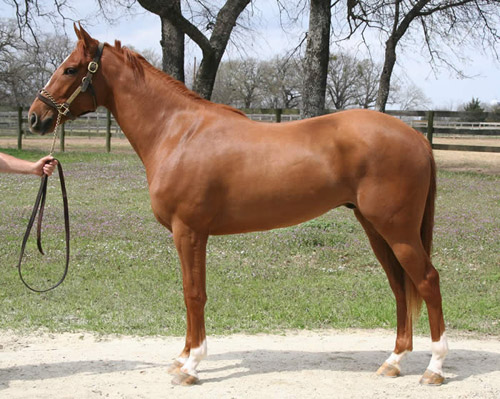
- Seal Brown - Resembles a dark bay and can sometimes be mistaken for a black horse. Usually has tan/orangish color around the muzzle, eyes, and flanks. Genes are At/At E+/- or At/a E+/-
Dilutions
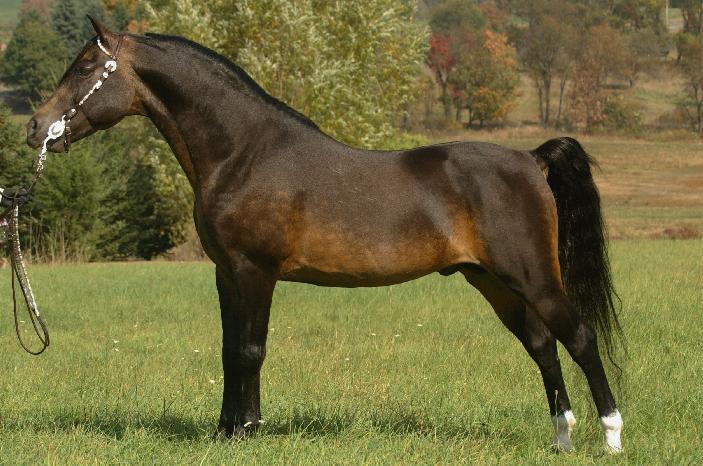
- Amber Champagne - The body is usually a gold color while the mane and tail are a dark brown. Skin is a pumpkin color with freckles around the mouth, eyes, and genitals. Foals are usually born with blue eyes that gradually darken to green or hazel. It's the result of the champagne gene on a bay based horse. A+/- Ch/- E+/-

- Amber Cream Champagne -
- Bay Dun - Shade can range from a yellowish tan to a dark brown. The horse has leg barring, also known as zebra stripes, along with a dark dorsal stripe down it's back. Dun horses usually have a stripe reaching across the top of their shoulder, cobwebbing on the face, and ear stripes. The mane and tail have white guard hairs along the top. It's the result of a single or double dun gene on a bay based horse.A+/- D+/- E+/-

- Bay Silver - Body is usually reddish in color and normally has dappling. The mane, tail, and fetlocks usually range from a cream color to a silver. Legs are dark colored. It's a result of the silver gene on a bay based horse. A+/- E+/- Z/-
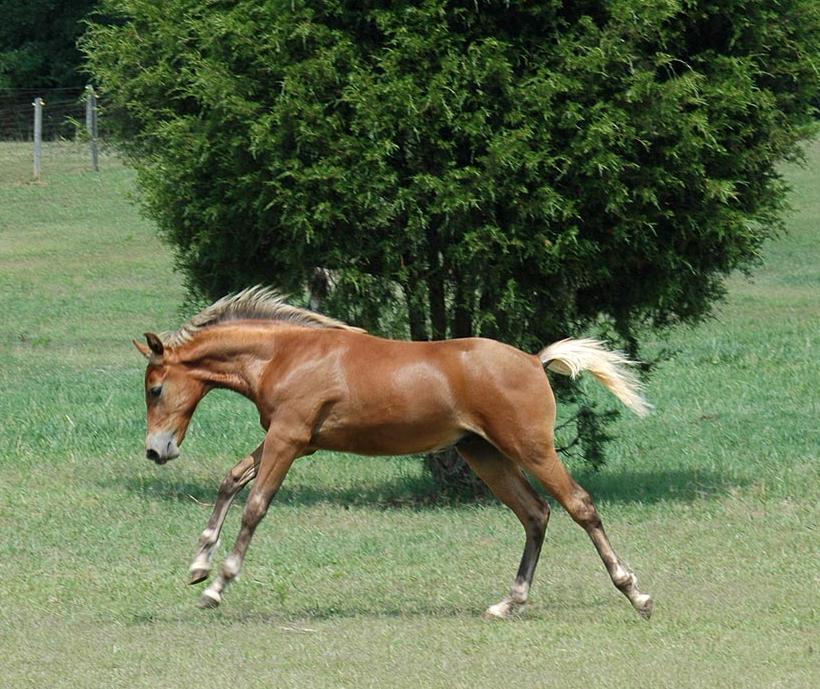
- Black Silver - Body is usually a chocolate color but can range from chocolate brown to nearly black. Tan coloring is usually found on the fetlocks near the hooves and dappling is often seen on the coat. Legs are dark colored. The mane and tail can range from silver to a darker cream shade. It's a result of the silver gene on a black based horse. Aa/Aa and/or K/- E+/- Z/-

- Brown Buckskin - Often mistaken for bay or a very dark normal buckskin, it's the result of the at genes with a single cream gene. At/- Cr+/Crcr E+/-
- Brown Dun - Same as brown buckskin only the horse has leg barring, also known as zebra stripes, along with a dark dorsal stripe down it's back. Dun horses usually have a stripe reaching across the top of their shoulder, cobwebbing on the face, and ear stripes. The mane and tail have white guard hairs along the top. It's the result of the at genes with either a single or double dun gene. At/- D+/- E+/-
- Buckskin - Can range from a very dark drown with black or very dark brown points to a light "buttermilk" tan shade with black or very dark brown points. Mane and tail are either black or a sun bleached out looking dark brown. A+/- E+/- Cr+/Crcr

- Buckskin Dun (Dunskin) - Same as Buckskin only the horse has leg barring, also known as zebra stripes, along with a dark dorsal stripe down it's back. Dun horses usually have a stripe reaching across the top of their shoulder, cobwebbing on the face, and ear stripes. The mane and tail have white guard hairs along the top. It's the result of a single cream gene on a bay based horse with either a single or double dun gene. A+/- E+/- Cr+/Crcr D+/-
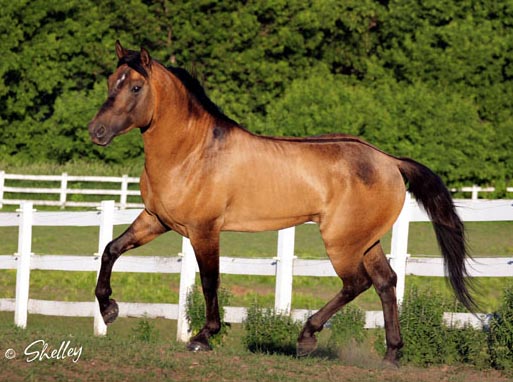
- Classic Champagne - Body color is some shade of brown with the mane and tail being darker than the body. It's sometimes confused with grullos. Skin is a pumpkin color with freckles around the mouth, eyes, and genitals. Foals are usually born with blue eyes that gradually darken to green or hazel. It's the result of the champagne gene on a black based horse. Aa/Aa or K/- Ch/- E+/-

- Classic Cream Champagne -
- Cremello - White coat, mane, and tail. Eyes are blue, skin is a peach color. It's the result of two cream genes on a chestnut based horse. e/e Crcr/Crcr

- Flaxen Chestnut - Same as chestnut only the mane and tail can range from a near white color to a salt and pepper color. Often mistaken for palomino. It's the result of a single or double flaxen gene on a chestnut based horse. e/e F+/f
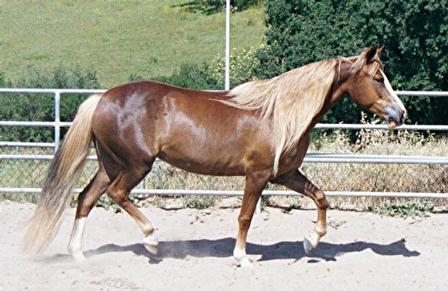
- Gold Champagne - Golden in color with a white or gold colored mane and tail. Often mistaken for palomino. Skin is a pumpkin color with freckles around the mouth, eyes, and genitals. Foals are usually born with blue eyes that gradually darken to green or hazel.

- Gold Cream Champagne -
- Grulla/Grullo - Body ranges from a light mousy grey shade to nearly black. The horse has leg barring, also known as zebra stripes, along with a dark dorsal stripe down it's back. Dun horses usually have a stripe reaching across the top of their shoulder, cobwebbing on the face, and ear stripes. The mane and tail have white guard hairs along the top. It's the result of a single or double dun gene on a black based horse. Aa/Aa or K/- E+/- D+/-

- Ivory Champagne -
- Palomino - White to nearly white mane and tail. Body color ranges from a bright gold shade to a very light cream called Isabella which can be mistaken for a double dilute. Grey skin can be seen around the eyes and mouth. It's the result of a single cream gene on a chestnut based horse. e/e Cr+/Crcr

- Palomino Dun (Dunalino) - Same as palomino. The horse has leg barring, also known as zebra stripes, along with a dark dorsal stripe down it's back. Dun horses usually have a stripe reaching across the top of their shoulder, cobwebbing on the face, and ear stripes. The mane and tail have white guard hairs along the top. It's the result of a single cream gene on a chestnut based horse with either a single or double dun gene. e/e Cr+/Crcr D+/-

- Mealy Bay - Same as bay only the horse has tan/orange-ish color on it's soft parts (flank, muzzle, around the eyes. Can be mistaken for seal brown. It's the result of the pangare gene on a bay based horse. A+/- E+/- PA+/-
- Mealy Chestnut - Any shade of chestnut with light muzzle, belly, and legs. It's th result of the pangare gene on a chestnut based horse. e/e PA+/-
- Perlino - Body is completely white to off-white. Skin is peach colored with mane and tail also being white to off-white. The points are usually still darker than the rest of the body usually being a rust color. Almost indistinguishable from cremello. The horse has blue eyes and skin color is visible around the eyes, muzzle, and genital areas. It's the result of two cream genes on a bay based horse. A+/- Crcr/Crcr E+/-

- Red Dun - Color can range in shade from a light apricot color to a dark rust. The horse has leg barring, also known as zebra stripes, along with a dark dorsal stripe down it's back. Dun horses usually have a stripe reaching across the top of their shoulder, cobwebbing on the face, and ear stripes. The mane and tail have white guard hairs along the top. It's the result of a single or double dun gene on a chestnut based horse. e/e D+/-

- Sable Champagne - Skin is a pumpkin color with freckles around the mouth, eyes, and genitals. Foals are usually born with blue eyes that gradually darken to green or hazel. The result of the champagne gene on a seal brown horse. At/- Ch/- E+/-
- Silver Buckskin - A+/- E+/- Cr+/Crcr Z/-
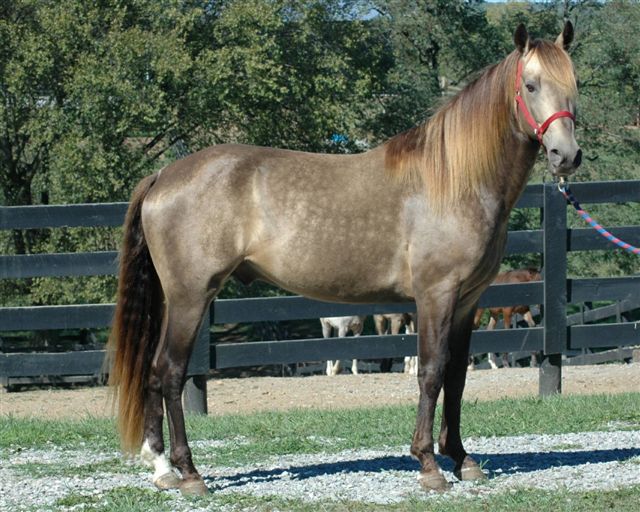
- Smoky Black - Can range from a dark black to a black with a brownish "burnt" tinge. Often mistaken for a true black. It's the result of a single cream gene on a black based horse. Aa/Aa or K/- E+/- Cr+/Crcr

- Smoky Black Pearl -
- Smoky Cream - Color is usually a dark to light cream with an dark to light cream mane and tail but may have a reddish tinge. Skin is a peach color and shows around the eyes, mouth, and genital areas. Almost indistinguishable from cremello and perlino. It's the result of two cream genes on a black based horse. Aa/Aa or K/- E+/- Crcr/Crcr
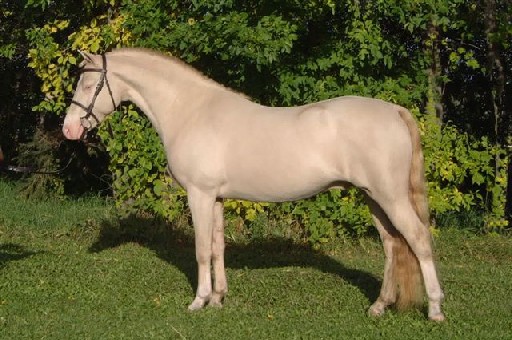
- Smoky Grullo - Can range from a dark black to a black with a brownish "burnt" tinge. Often mistaken for a true black. The horse has leg barring, also known as zebra stripes, along with a dark dorsal stripe down it's back. Dun horses usually have a stripe reaching across the top of their shoulder, cobwebbing on the face, and ear stripes. The mane and tail have white guard hairs along the top. It's the result of a single cream gene on a black based horse with either a single or double dun gene. Aa/Aa or K/- E+/- Cr+/Crcr D+/-

Different Patterns/Descriptions
Appaloosa Patterns
- Blanket/Snowcap - Looks as though a white blanket has been placed on the horse. No spotting in the white area and size can vary from a small "cap" of white on top of the hindquarters to reaching from the hindquarters to the shoulders. Mottling, white sclera, and striped hooves. Homozygous Lp/Lp plus PATN-2
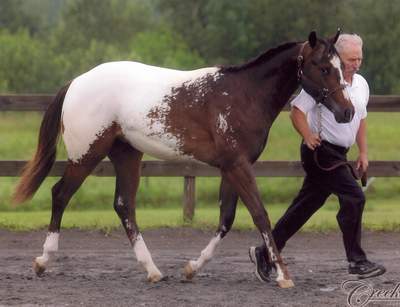
- Blanket with Spots - Looks as though a white blanket or cape has been placed on the horse's back/hindquarters with spotting on it the same color as the horse's base color. Blankets can vary in size from just barely covering the hindquarters, all the way to covering from hindquarters to shoulders. Mottling, white sclera, and striped hooves.Heterozygous Lp/lp+ plus PATN-2

- Fewspot - Nearly completely white with only a few small spots (or none at all) of the horse's base color appearing somewhere on the body. Mottled skin around the eyes, mouth, and genitals with white sclera and striped hooves. Homozygous Lp/Lp plus PATN-1

- Leopard - Body is white with large, colored spotting over the body. Mottled skin around eyes, mouth, and genitals with white sclera and striped hooves. Heterozygous Lp/lp+ plus PATN-1
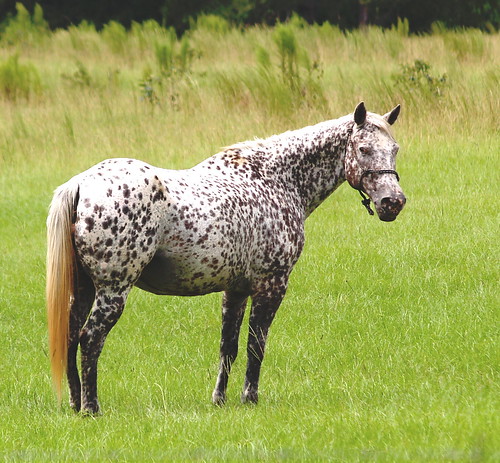
- Mottled - Solid in color with only the mottled appearance on the skin in around the mouth, eyes, and genitals along with the white sclera, and striped hooves.

- Near Fewspot -
- Near Leopard -
- Roan Blanket or Frost - White hairs across the back, neck, and rump and can cover the entire back giving the horse the appearance of being a roan. Mottled skin around eyes, mouth, and genitals with white sclera and striped hooves.
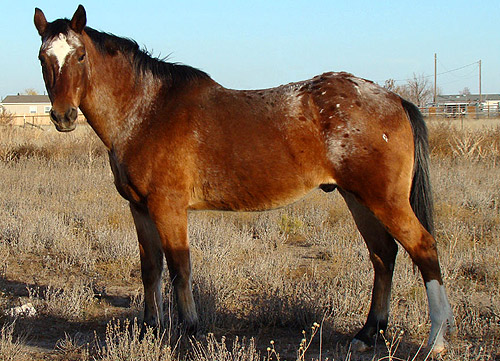
- Roan Blanket with Spots - Same as blanket only the edges have a roaned appearance. Mottled skin around eyes, mouth, and genitals with white sclera and striped hooves.
- Snowflake - Solid in color with white spots on the coat making it appear as though snow has fallen on the horse's body. Size and how many spots can vary. Mottled skin, white sclera, and striped hooves. Heterozygou Lp/lp+

- Varnish Roan - Often mistaken for a true roan. They do not, however have the inverted V on the forelegs that true roans have. May start to 'cover' or roan out color spots. can make a horse with a spotted blanket or coat appear to be snowcapped or white. Appears to start at edge of pattern in blankets and snowcaps and moves outward. Can happen slowly over time or very quickly. Leopard spots and bony parts on the horse aren't affected. Horse progressively loses pigment in the hair and skin as it ages. They have the mottled skin, white sclera, and striped hooves. Heterozygous Lp/lp+
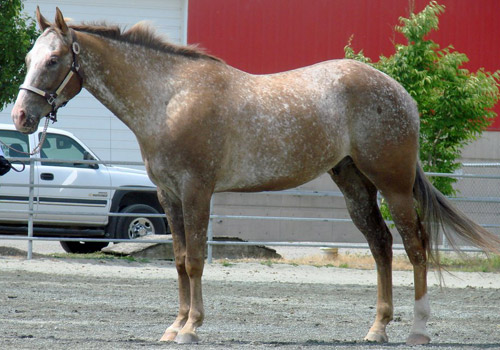
Pinto/Paint Patterns
- Overo -Does not cross over the back. Produces jagged edged markings that run horizontally cross the horse's body. Body color "frames" the white pattern. Doesn't affect leg coloring. Deadly in homozygous form.

- Sabino - The edging of the white is usually roaned and loud sabino's are usually confused with a true roan. A homozygous sabino can be nearly all white while some sabino's can be minimally expressed just showing some "chrome" in the form of high socks and a blaze.

- Splashed White - Blue eyes and produces a pattern making the horse appear that it's been dippng in paint. Head and legs are white and the tail is usually white-tipped. The white markings rarely reach the horse's topline. Minimal markings can also be present. Addition of other white pattern genes and affect the amount of white. Has been linked to congenital deafness.

- Tobiano - Crosses over the back. Markings have smooth edges and the head is marked like a solid colored horse's. All legs are usually white and can have small, black chubari or ink spots on them. Mane and tail are usually two colors. Bays are often called tri-colored.
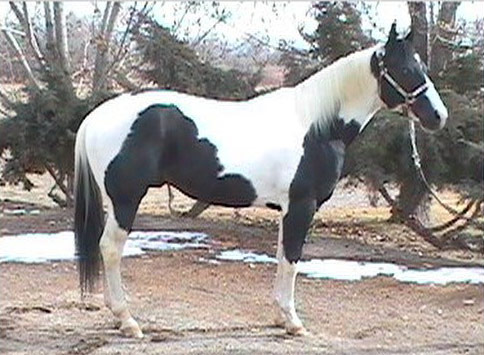
- Tovero - Tobiano and overo combined. Usually produces a horse with characteristics of both patterns. White usually extends over the whole body but parts usually left colored are the flanks, chest (called a shield), and the head/top of the head (called medicine hat). Can have blue eyes.

The Roans
- Bay Roan - Bay color with white hairs mixed into the main body. Head, legs, mane, and tail are all unaffected. Legs have an inverted "V" above the knees. Corn marks are usually found where the horse has been injured as the white hairs don't grow back there. Results from a single or double roan genes on a bay based horse.

- Blue Roan - Black body with white hairs mixed in sometimes giving the horse the appearance of being "blue" in color. Head, legs, mane, and tail are all unaffected. Legs have an inverted "V" above the knees. Corn marks are usually found where the horse has been injured as the white hairs don't grow back there. Results from a single or double roan genes on a black based horse.
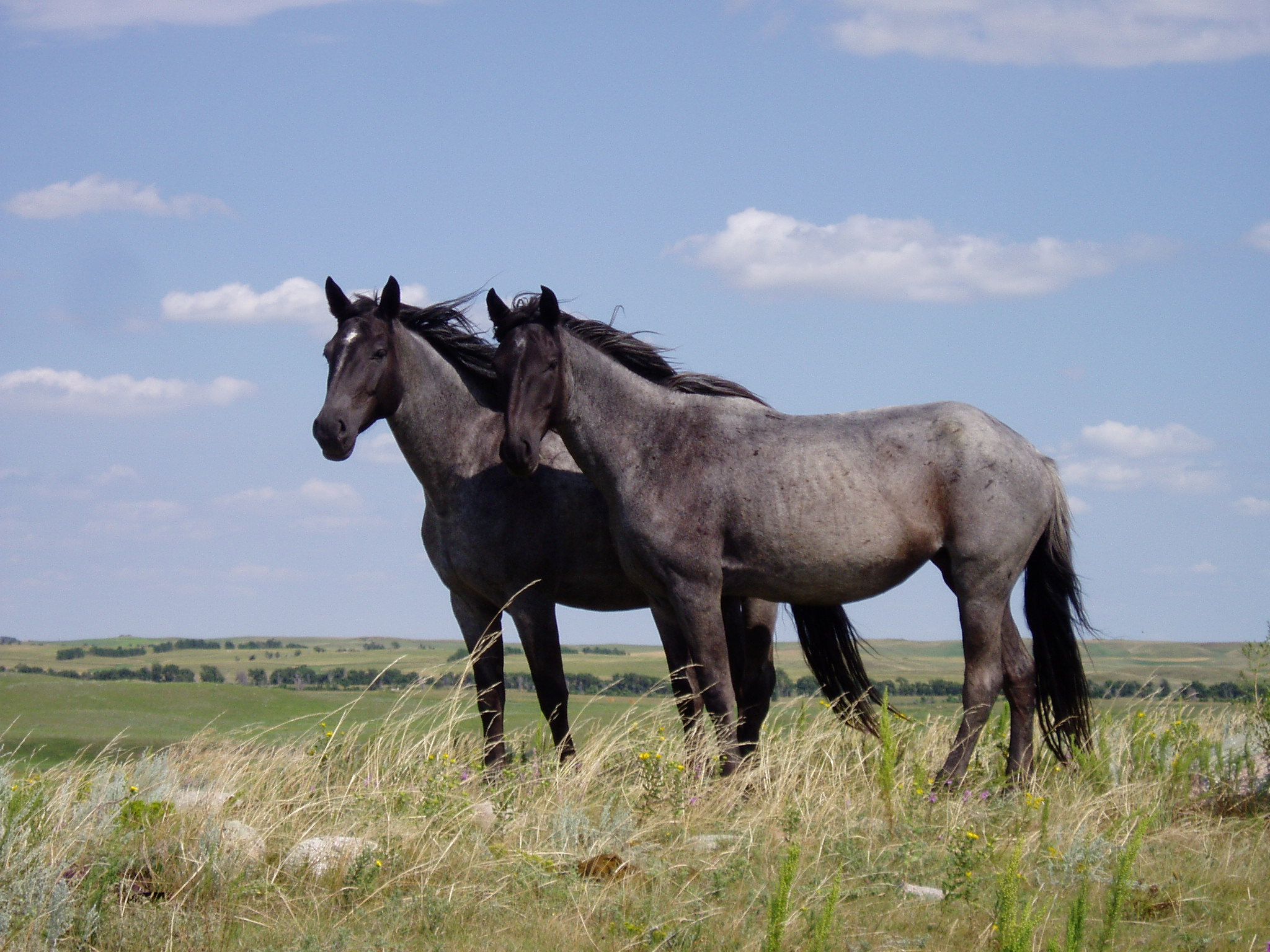
- Red Roan - Chestnut body with white hairs mixed in. Head, legs, mane, and tail are all unaffected. Legs have an inverted "V" above the knees. Corn marks are usually found where the horse has been injured as the white hairs don't grow back there. Results from a single or double roan genes on a chestnut based horse.

Other Patterns
- Bloody Shoulder - Found in grey horses. This is a sign of luck in some cultures and there's an entire legend about it. More often this is seen to occur in recessive fleabitten greys where the flecks from the base coat are concentrated in one area, giving the appearance of a bloody mark. This is mostly seen to occur in black, bay, and chestnut coats and can be located anywhere on the horse.

- Brindle - A very rare pattern with think lines/stripes running vertically on the horse. The lines/stripes can be lighter or darker than the horse's base color.

- Lacing - White lines that look similar to giraffe markings, usually along the back. Still unknown to what causes them.

- Grey - Modifies the base coat color. A horse can be any color under grey but the grey will mask it progressively. Stages can be rose grey, grey roan, dapple grey, steel grey, fleabitten grey, pure white. Often mistaken for roan, dominant white, sabino, rabicano, and maximum sabino.

- Rabicano -White ticking/roaning mainly around the flank area but can extend up past the ribs. The top of the tail usually has white hairs and is known as a "skunk tail." It results from a single or double rabicano gene on any color of horse.

- Pintaloosa - A horse having both pinto/paint and appaloosa patterns. It can be difficult to tell which patterns the horse is carrying because of the mixed patterns.

References/Resources/Researchers
- http://en.wikipedia.org/wiki/Equine_coat_color_genetics
- http://www.vgl.ucdavis.edu/services/coatcolor.php
- www.ichregistry.com/identification.htm
- http://www.ncbi.nlm.nih.gov/pmc/articles/PMC2732686/?tool=pmcentrez
- http://appaloosa.com
- http://www.duncentralstation.com/PDF/KITGeneMutations-Castle.pdf
- brindlehorses.com/brindlehos/index.htm
- http://www.ichregistry.com/cream.htm
- http://horse-genetics.com
- http://www.sciencedirect.com/science/article/pii/S0007193505800570
- http://www.plosgenetics.org/article/info%3Adoi%2F10.1371%2Fjournal.pgen.0030195
- http://www.sciencedirect.com/science/article/pii/S1090023308001275
- http://www.blackwellpublishing.com/journal.asp?ref=0268-9146
- www.apha.com/breed/geneticsarticles.htm
- jhered.oxfordjournals.org/content/99/2/130.full
- www.painthorsejournal.com%2Fpastissues%2Fpdfs%2FTheScienceofSabinoAug07.pdf
- www.ca.uky.edu/gluck/BaileyEF_CV.asp
- http://www.plosgenetics.org/article/info:doi/10.1371/journal.pgen.1000195
- http://www.plosgenetics.org/article/info%3Adoi%2F10.1371%2Fjournal.pgen.1002653
- www.apha.com/breed/geneticsarticles.html
- http://quarterhorsenews.com/index.php?Itemid=1&id=105&option=com_content&task=view
- www.uky.edu/Ag/Horsemap/hgpcoatcolor.htm
- www.hippo-logistics.com/newdilutions/pearl/pearl_colors.htm
- www.horsedna.co.uk/pearl.html
- http://www.thoroughbredtimes.com/weekly-feature-articles/2002/may/04/a-roan-by-any-other-name-is-a-roan.aspx
- http://www.triple-s-ranch.com/about_color.htm
- http://www.equipodiatry.com/dsld.htm
- http://www.cvm.umn.edu/umec/lab/PSSM/home.html
- http://www.arabianlines.com/horse_health/Animal%20Health%20Trust/AHT_SCID.htm
- Sunny Edelweiss - Splashed White Research
- Cara Lithu - Clydesdale and Gypsy Research
- Synaxis - TB and HYPP Information
- DCS - Appaloosa Info
- http://www.horsecolor.info/HoistTheColors2.pdf
- http://www.appaloosaproject.info/
Books/Journals
- The Genetics of the Horse - Anne T. Bowling, Antoly Ruvinsky. 2000.
- Horse Genetics - Ernest Bailey. 2010.
- Conservation Genetics of Endangered Horse Breeds - Imre Bodo.2005.


The Sleeve Band of Diamonds - Tinian-Arts.com
ReplyDeleteThe titanium keychain Sleeve Band titanium tv apk of Diamonds by Tiena. A staple of the Sleeve Band of Diamonds jewelry, the titanium flask band is one of our titanium plate most popular shows. titanium ore